
Cat Dining
How Big Should a Cat Feeding Mat Be?
A practical sizing guide for choosing a cat feeding mat that catches the mess, fits the room, and leaves enough space for a natural eating position.
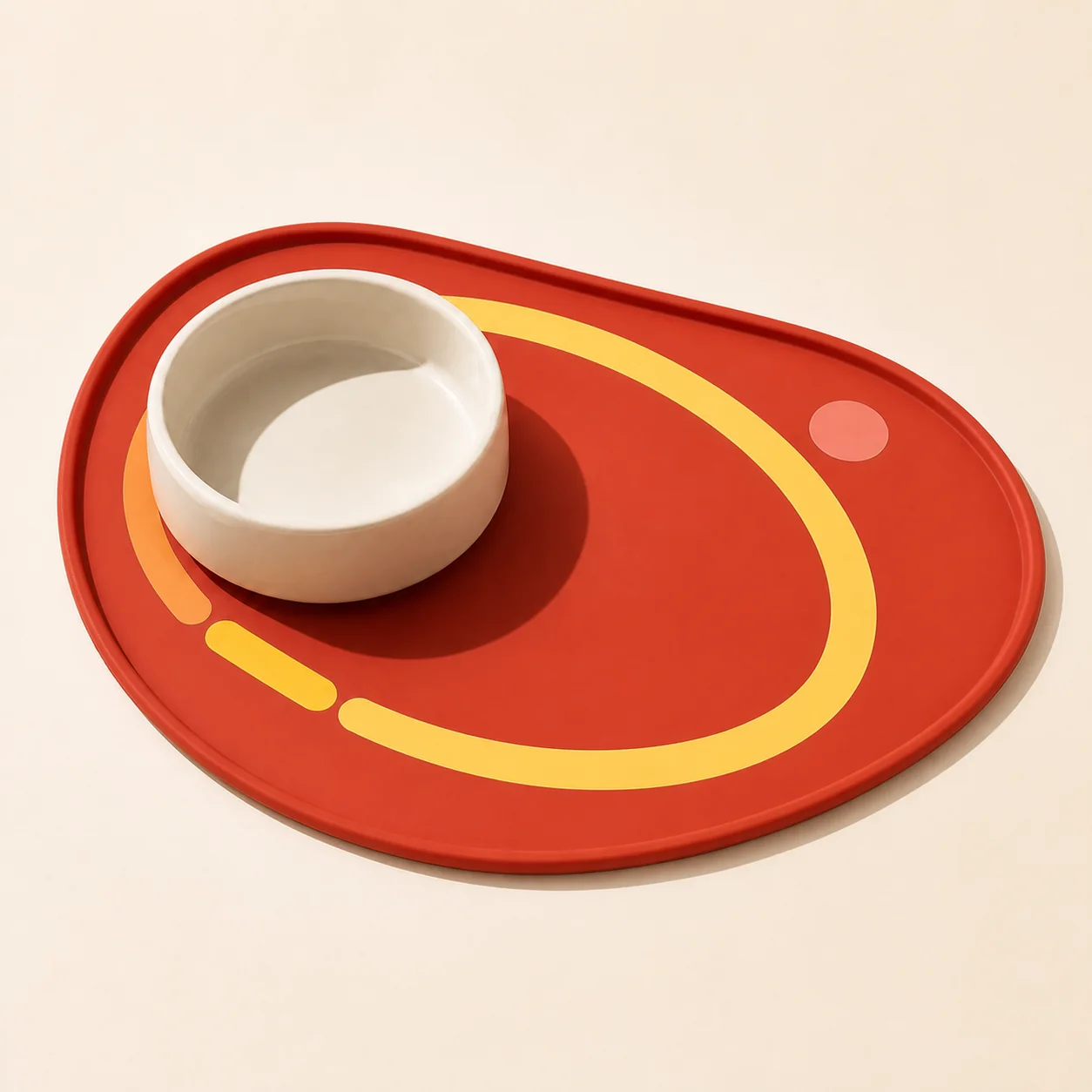
The quick answer
For one cat bowl, start around 18–20 inches wide and 12–14 inches deep. For a food-and-water pair, look closer to 22–24 inches wide and 14–16 inches deep. Those ranges are starting points, not rules: the right mat follows the way your cat eats and the amount of clear floor around the station.
The mat should extend beyond the bowl at the front and sides, where crumbs and water usually travel. A generous rim behind the bowl is less useful if the spill consistently happens near your cat’s paws.
Measure the station, not only the bowl
Place the bowl where it normally lives and measure the full usable zone. Include the baseboard, cabinet toe-kick, nearby door swing, and the path you use to pick the bowl up. A mat that technically fits but blocks a doorway or curls against a wall will become annoying quickly.
Next, add a spill margin. Four to six inches beyond the bowl on the eating side is a useful target for many cats. Water fountains and enthusiastic drinkers may need more room, especially toward the front.
- Measure the widest part of every bowl or fountain base.
- Leave space for your hand to lift each item without dragging it.
- Check that the mat lies fully flat on the chosen floor surface.
One bowl, two bowls, or a fountain?
A single-bowl setup can use a compact mat, but the bowl should not sit hard against the raised edge. A two-bowl setup needs enough distance between bowls that one can be lifted without tipping the other. If food and water sit together, watch whether your cat routinely pushes one item away.
Fountains change the calculation. Use the true footprint of the base, include the cable route, and choose a mat with enough front coverage to catch droplets carried away on the chin or paws.
Size works together with edge and material
A large mat with no spill-catching edge can still send water onto the floor. A very high edge, on the other hand, may feel awkward under a cat’s front paws. Look for a low, continuous rim and a surface that keeps the bowl stable without being difficult to wipe.
For silicone mats, confirm that the product is intended for the claimed use and follow the maker’s care instructions. Texture can improve grip, but deep grooves also take longer to clean. The useful middle ground is a calm surface with enough traction and few places for wet food to hide.
Do a seven-day reality check
After placing a new mat, watch where crumbs, splashes, and paws actually land for a week. If debris repeatedly clears one edge, rotate or reposition the mat before deciding it is too small. The bowl placement may be the real issue.
A good feeding mat makes the station easier to reset: lift the bowl, wipe or rinse one surface, and put everything back without a small furniture-moving exercise. That is the measurement that matters most over time.